
Demystifying JSON: How to Troubleshoot Common Parsing Errors
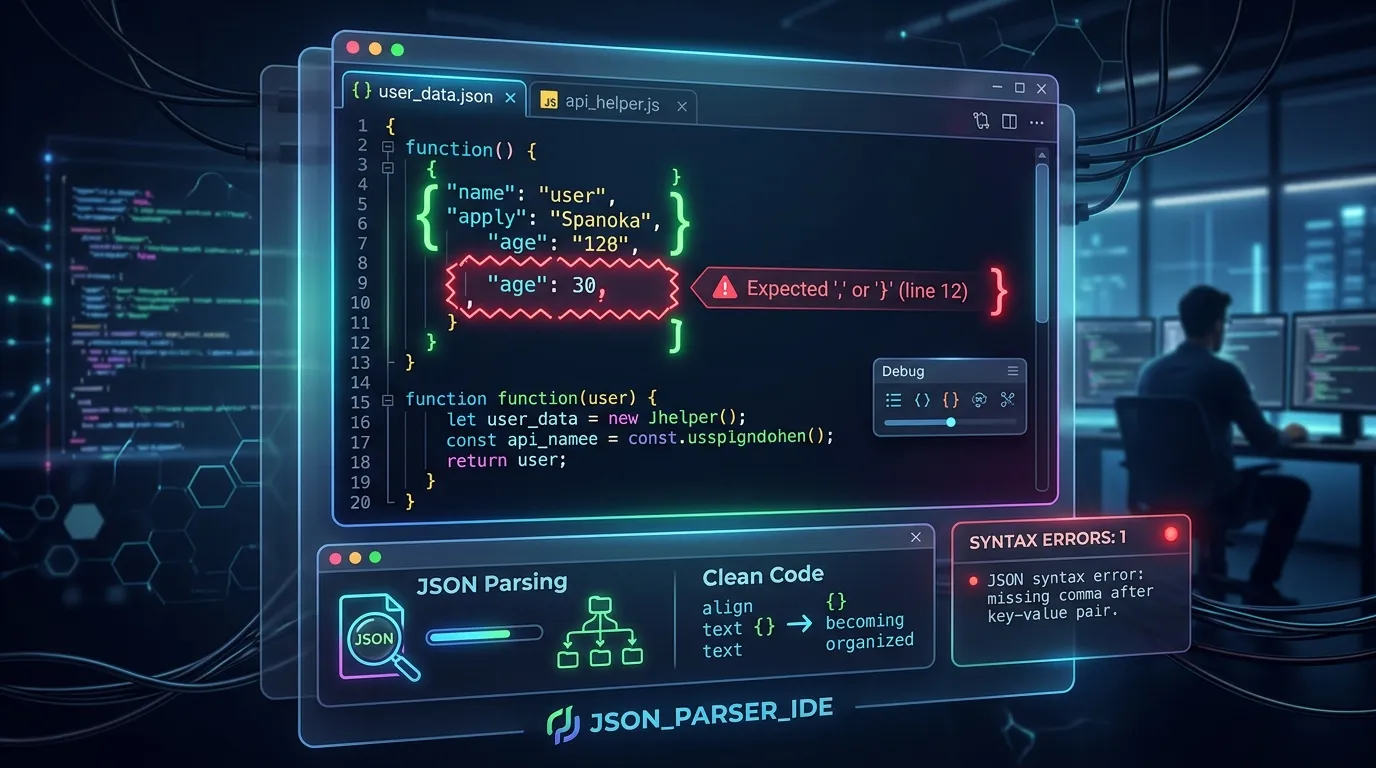
JSON (JavaScript Object Notation) is the language of modern web APIs, configurations, and data exchanges. Its syntax is simple, lightweight, and easy for both humans and computers to read. However, because it is so strict, even a single out-of-place character can cause parsers to fail, crashing your application or returning vague errors. This guide covers how to debug the most common JSON formatting mistakes quickly.
1. The trailing comma trap
In JavaScript arrays and objects, trailing commas are allowed and often encouraged. In JSON, however, they are strictly forbidden. Adding a comma after the last item in a list or object is the most common cause of parsing failures. Check the end of your objects and lists first when a JSON string fails to parse.
2. Single quotes vs. double quotes
JavaScript allows you to define strings using single quotes, double quotes, or backticks. JSON is much more strict: all keys and string values must be wrapped in double quotes. Single quotes will always throw a syntax error. If you are copying data from a JavaScript file or console log, you will need to replace single quotes with double quotes before parsing.
3. Unescaped special characters
If your string values contain double quotes, backslashes, or control characters, they must be escaped using a backslash. For example, a quote inside a string must be written as `\"`. Forgetting to escape quotes breaks the string boundaries, causing the parser to think the string has ended prematurely and throwing a syntax error on the subsequent characters.
4. Missing quotes around keys
In standard JavaScript objects, quotes around keys are optional if the key name is a valid identifier. In JSON, keys are strings and must always be enclosed in double quotes. Objects like `{name: "John"}` are invalid JSON; they must be written as `{"name": "John"}`.
How to systematically validate JSON
- Check for and remove any trailing commas at the end of lists or objects.
- Ensure all keys and string values use double quotes, never single quotes.
- Verify that special characters inside strings are properly escaped with backslashes.
- Use a visual formatter that highlights the exact line and character where the parser failed.